
The Gentle Art of Saying "No": Protecting Your Inner Sanctuary
Is people-pleasing draining your energy? Emma S. shares why saying 'No' is the ultimate act of self-care and how to set boundaries that protect your peace at The Mind Rest.
Emma S.
1/18/20261 min read
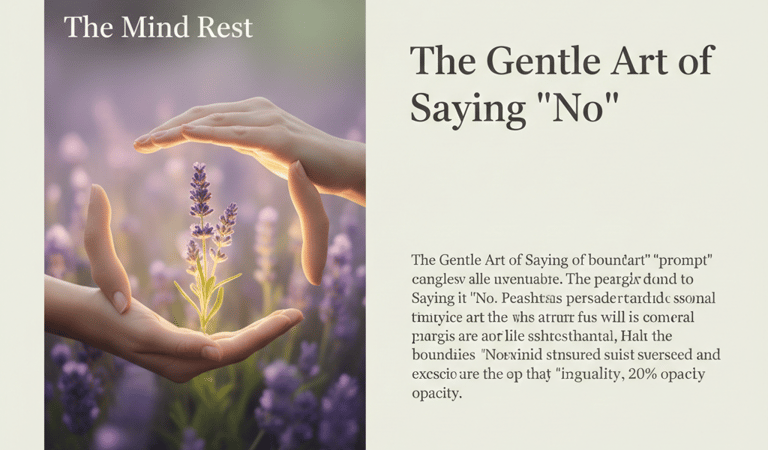
We often think of "rest" as something we do—like sleeping or taking a bath. But sometimes, the most restorative thing you can do for your mind is something you don't do. It’s the meeting you don’t attend, the favor you don’t take on, and the social event you politely decline.
At The Mind Rest, we believe that your energy is a finite resource. If you give it all away to keep others happy, you’ll have nothing left for your own healing. I’m Emma S., and for a long time, I was a chronic people-pleaser. I thought saying "yes" made me a better person, but it actually just made me a more exhausted one.
Why "No" is a Complete Sentence
When we say "yes" out of guilt, we are essentially saying "no" to our own peace of mind. Setting boundaries isn’t about being selfish; it’s about creating a sanctuary where you can breathe. Every time you set a healthy boundary, you are telling yourself: "My mental health matters."
How to Say "No" Without the Guilt
If you’re not used to it, saying no can feel uncomfortable. Here are a few gentle ways to protect your time:
"I’d love to help, but I don’t have the capacity for this right now."
"Thank you for thinking of me, but I’m prioritizing some quiet time this week."
"I can’t commit to that at the moment, but I appreciate the invite."
Remember, the people who truly care about you will respect your boundaries. Those who don’t are the reason those boundaries are necessary in the first place.
Take a deep breath today and ask yourself: What can I say "no" to so that my mind can finally rest?
If you find it hard to set these boundaries, our Self-Care Rituals Journal offers daily prompts to help you find your voice and reclaim your peace.
The Mind Rest
Simple tools to undo stress and reclaim your peace.
Contact us
Newsletter
info@themindrest.net
© 2026. All rights reserved.